- Tiruchirappalli | Chennai | Pudukottai | Kumbakonam | Virudhachalam





- Sultan Rice House
- February 20, 2026
- No Comments
Tips for perfect grains every time — because great rice deserves more than guesswork.
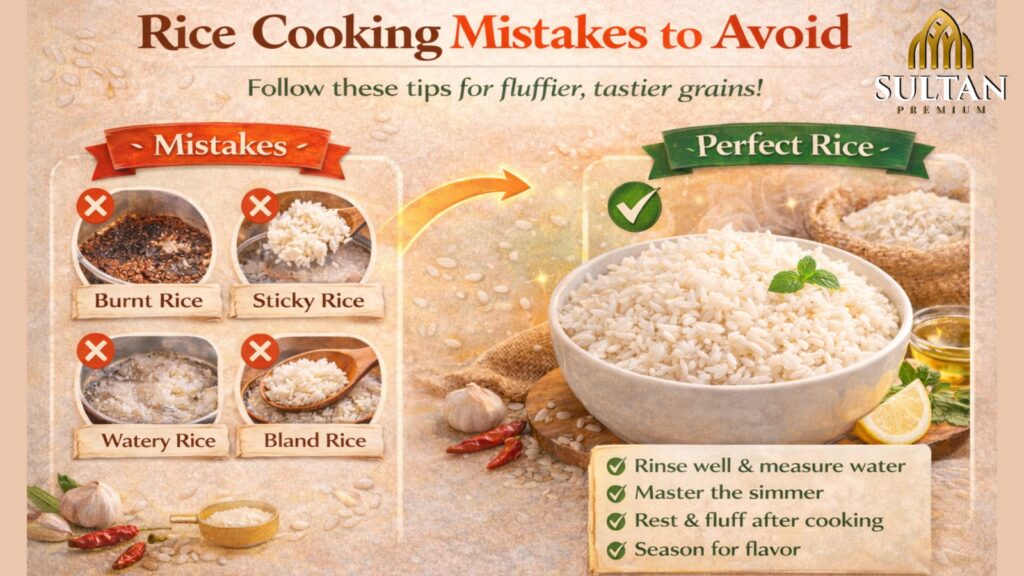
Rice feeds more than half the world, yet cooking it perfectly still feels difficult for many home cooks. Sticky grains, burnt bottoms, dry centres, or bland flavour are common problems faced in everyday kitchens. The truth is, great rice is not about luck or expensive equipment — it’s about following the right technique with care and consistency.
At Sultan Rice House, years of working closely with rice have shown that small mistakes make the biggest difference. Below are the most common rice-cooking errors and the simple fixes that transform ordinary rice into perfectly cooked grains.
The 6 Most Common Rice Cooking Mistakes
1. Not Rinsing the Rice
Rice grains are coated with loose surface starch due to milling and handling. When unrinsed rice is cooked, this starch mixes with boiling water and forms a sticky paste, causing grains to clump together.
The Fix
Rinse rice under cold water 2–3 times until the water runs mostly clear. This removes excess starch and helps grains stay separate and fluffy after cooking.
2. Using the Wrong Water Ratio
One of the biggest mistakes is assuming all rice needs the same amount of water. Too much water makes rice mushy, while too little leaves it hard and undercooked in the centre.
The Fix
Use the correct ratio for white rice varieties:
• Basmati: 1 cup rice to 1.5 cups water
• Standard long-grain white rice: 1 cup rice to 1.75 cups water
Always measure rice and water using the same cup.
3. Lifting the Lid While Cooking
Opening the lid during cooking releases steam, which is essential for even heat distribution. Every peek interrupts the cooking process and leads to uneven texture.
The Fix
Once the rice reaches a boil and the lid is placed on, do not open it until cooking is complete. No stirring, no checking — let the steam do its job.
4. Cooking on High Heat the Entire Time
High heat causes water to evaporate too quickly. The bottom layer burns while the top remains undercooked, resulting in inconsistent rice.
The Fix
Bring water to a full boil, then reduce heat to the lowest simmer possible. Cover and cook gently for 12–15 minutes for white rice.
⸻
5. Skipping the Resting Period
Rice continues to cook even after the heat is turned off. Skipping the resting step causes moisture to remain unevenly distributed.
The Fix
After cooking, remove the pot from heat and let it rest for 8–10 minutes, lid on. Then fluff gently using a fork to separate the grains.
⸻
6. Forgetting Salt and Fat
Rice cooked in plain water tastes flat. Salt enhances flavour from the inside, while fat improves texture and prevents sticking.
The Fix
Add a generous pinch of salt and ½ teaspoon of butter, ghee, or oil to the water before cooking. This simple step greatly improves taste and mouthfeel.
Bonus Tips for Restaurant-Quality Rice
Toast the Rice Before Cooking
Lightly toast dry rice in a hot pot for 2 minutes before adding water to develop a subtle nutty aroma.
Add a Few Drops of Lemon Juice
Lemon juice brightens flavour, keeps rice white, and helps reduce stickiness.
Cook Rice in Broth
Replacing water with vegetable or chicken broth adds depth and richness without extra effort.
Reheat Rice with Steam
Sprinkle a little water over leftover rice, cover, and steam gently to restore softness instead of drying it out.
Final Thought
Perfect rice is rarely about the grain itself — it’s about attention and technique. Small adjustments like rinsing properly, controlling heat, resting the rice, and seasoning the water can completely change the outcome.
At Sultan Rice House, every bowl begins with intention. Apply even one of these tips today and taste the difference. Apply them all, and you’ll achieve perfectly cooked rice — every single time.